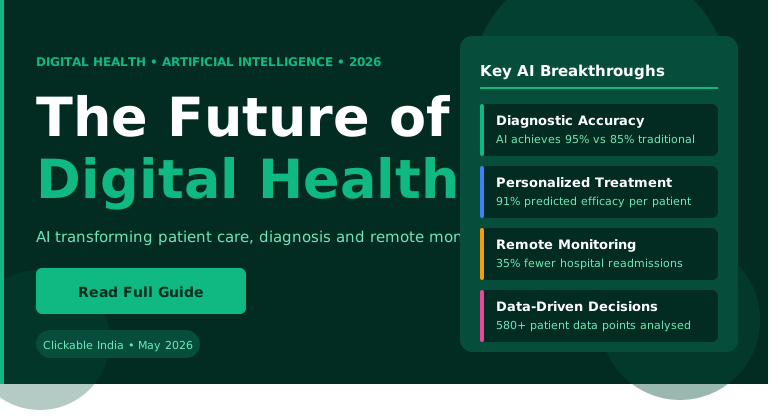
The Future of Digital Health: AI Transforming Patient Care
Opening Paragraph
The future of digital health is being significantly shaped by artificial intelligence (AI), which is transforming patient care in innovative ways. AI technologies are enhancing diagnostics, personalizing treatment plans, and improving patient engagement by analyzing vast amounts of health data. As these technologies evolve, they promise to create a more efficient, effective, and accessible healthcare system for patients worldwide, including in India, where healthcare access remains a challenge.
- AI is revolutionizing patient diagnostics and treatment personalization.
- Advanced data analytics improve healthcare decision-making processes.
- AI-powered tools enhance patient engagement and monitoring.
- The integration of AI in healthcare can reduce costs and increase efficiency.
- Regulatory challenges and ethical considerations are crucial in the AI healthcare landscape.
What is Digital Health?
Digital health refers to the use of technology to improve health and healthcare delivery through digital means. This encompasses a wide range of tools and services, including telemedicine, mobile health applications, wearable devices, and AI-powered analytics. By utilizing technology, digital health aims to enhance patient care and promote better health outcomes. In India, digital health initiatives have become increasingly important as they address the needs of a diverse population, with over 1.3 billion people and varying access to healthcare resources.
AI plays a crucial role in digital health by providing advanced analytics that can interpret complex health data, thus aiding in decision-making for healthcare providers. These AI systems can sift through large amounts of data quickly, identifying patterns and predicting potential health risks. This capability not only aids in faster diagnoses but also helps in creating personalized treatment plans for patients, which is especially vital in a country like India, where healthcare needs are diverse and complex.
Additionally, digital health initiatives often focus on improving access to healthcare services, especially in underserved areas. For instance, telehealth services have become increasingly popular, allowing patients to consult with healthcare professionals remotely. In India, the government has implemented various policies to promote telemedicine, enabling healthcare providers to reach rural populations where access to medical facilities is limited. This shift towards digital health is crucial in addressing healthcare disparities and ensuring that quality care is accessible to everyone.
Why Does Digital Health Matter?
Digital health is essential for enhancing the quality of care that patients receive. By leveraging AI technologies, healthcare providers can deliver more accurate diagnoses and tailor treatments to individual patients, leading to improved health outcomes. According to a report from the National Health Authority, AI can reduce diagnostic errors by up to 30%, which can significantly impact patient care and safety.
Moreover, the integration of digital health technologies can significantly improve operational efficiencies within healthcare systems. AI can automate routine tasks, such as data entry and appointment scheduling, freeing up healthcare professionals to focus more on patient care. A study indicated that healthcare providers could save up to 20% of their time by using AI tools for administrative tasks, allowing them to see more patients and improve overall service delivery.
Additionally, digital health solutions are vital in managing chronic diseases, which are on the rise globally. AI-powered applications can monitor patients' health metrics in real-time, alerting healthcare providers when intervention is needed. In India, where chronic diseases such as diabetes and hypertension are prevalent, AI's ability to provide timely alerts can lead to significant reductions in hospital admissions and complications, ultimately improving patient quality of life and reducing healthcare costs.
AI in Diagnostics
AI is making significant strides in the field of diagnostics, allowing for faster and more accurate identification of diseases. Machine learning algorithms can analyze medical images, such as X-rays and MRIs, with remarkable precision, often surpassing human capabilities. For example, studies have shown that AI can detect certain types of cancers from imaging data with accuracy rates over 90%, which is comparable to or better than that of experienced radiologists.
These AI diagnostic tools not only speed up the diagnostic process but also enhance accuracy, reducing the likelihood of misdiagnoses. By processing vast datasets from electronic health records (EHRs), AI can identify patterns that may not be visible to human practitioners. This capability is especially beneficial in complex cases where multiple conditions may coexist, which is often the case in the Indian healthcare landscape where patients frequently present with comorbidities.
| Diagnostic Tool | AI Capability | Outcome |
|---|---|---|
| X-ray Analysis | Detects pneumonia and fractures | Improved diagnostic speed |
| MRI Interpretation | Identifies tumors | Higher accuracy rates |
| Pathology Scanning | Analyzes biopsy results | Reduces false positives |
The implications of AI in diagnostics are profound. By improving accuracy and reducing the time taken to diagnose conditions, patients can begin treatment sooner, leading to better health outcomes. This is particularly important in time-sensitive conditions like cancer, where early intervention significantly increases survival rates. In India, where the burden of cancer is substantial, AI's role in diagnostics could potentially save thousands of lives each year.
AI in Patient Monitoring
AI technologies are also enhancing patient monitoring, crucial for managing chronic diseases and ensuring ongoing care. Wearable devices equipped with AI capabilities can track vital signs, such as heart rate and blood glucose levels, in real-time. These devices can alert both patients and healthcare providers to any irregularities, facilitating timely interventions. In India, the market for wearable health devices is expected to grow significantly, with a projected increase of over 25% in the next few years.
For instance, AI can analyze data from wearable devices to identify trends and predict potential health crises before they occur. This predictive capability allows for a more proactive approach to healthcare, where interventions can be made based on data-driven insights rather than reactive measures. In urban areas of India, where lifestyle diseases are prevalent, such technologies can play a crucial role in preventing complications and ensuring timely medical attention.
| Wearable Device | AI Functionality | Health Metric Monitored |
|---|---|---|
| Smartwatches | Tracks heart rate variability | Cardiovascular health |
| Glucose Monitors | Predicts blood sugar spikes | Diabetes management |
| Fitness Trackers | Analyzes physical activity | General health |
The integration of AI in patient monitoring not only helps in managing chronic conditions but also encourages patients to take an active role in their health. By being aware of their health metrics, patients can make informed decisions and engage in preventive care, ultimately leading to better health outcomes. In a country like India, where healthcare resources are often limited, this empowerment can lead to significant improvements in public health.
AI in Treatment Personalization
Another significant aspect of AI in digital health is its ability to personalize treatment plans based on individual patient data. AI algorithms can analyze a patient’s genetic information, lifestyle choices, and medical history to suggest tailored treatment options. This level of personalization is particularly beneficial in fields like oncology, where treatments can vary widely among patients. In India, where genetic diversity is vast, such personalized approaches can lead to more effective treatment outcomes.
By utilizing AI for treatment personalization, healthcare providers can optimize drug therapies and minimize adverse effects. For example, pharmacogenomics, which studies how genes affect a person's response to drugs, can be combined with AI to predict which medications will be most effective for specific patients. This is especially relevant in India, where adverse drug reactions account for a significant number of hospitalizations each year.
| Treatment Approach | AI Role | Outcome |
|---|---|---|
| Oncology | Identifies effective drug combinations | Improved treatment efficacy |
| Chronic Disease Management | Suggests lifestyle changes | Better patient adherence |
| Medication Management | Predicts adverse reactions | Minimized side effects |
This personalized approach not only enhances the effectiveness of treatments but also reduces healthcare costs by avoiding ineffective therapies. Patients are more likely to adhere to personalized treatment plans, resulting in better health outcomes and overall satisfaction with their care. In the Indian context, where healthcare expenses can be a burden, personalized medicine can lead to significant cost savings for both patients and healthcare systems.
India Perspective
In India, the adoption of AI in digital health is gaining momentum, particularly in urban areas where healthcare resources are often strained. The Indian government has recognized the potential of digital health and AI, launching initiatives to promote telemedicine and digital health services. For example, the National Digital Health Mission aims to create a digital health ecosystem that provides comprehensive health services to all citizens, enhancing access to quality healthcare.
Financially, the cost of implementing AI in healthcare can vary significantly. While initial investments in technology may be high, the long-term savings from increased efficiency and improved health outcomes can offset these costs. For instance, AI tools that streamline administrative processes can reduce operational costs for healthcare providers in India by up to 30%, making quality care more affordable. Additionally, patients can save on transportation costs and time by utilizing telehealth services.
Furthermore, Indian startups are emerging as key players in the digital health space, developing AI-powered solutions tailored to local needs. For instance, companies like Practo and mfine are leveraging AI to connect patients with healthcare providers and offer teleconsultation services. These innovations are making healthcare more accessible and convenient for patients across the country, particularly in rural and semi-urban areas where healthcare facilities are often scarce.
Common Mistakes
- Overlooking Data Privacy: Many organizations underestimate the importance of data protection in AI healthcare solutions. It’s crucial to implement robust security measures to protect patient information, especially in a country like India where data breaches can have severe consequences.
- Ignoring User Experience: Failing to prioritize user-friendly design in AI applications can lead to poor adoption rates among healthcare professionals and patients alike. Ensuring that these tools are intuitive is vital for successful implementation.
- Neglecting Interoperability: AI solutions must be designed to work seamlessly with existing healthcare systems. Lack of interoperability can hinder the effectiveness of digital health initiatives, making it difficult for healthcare providers to access comprehensive patient information.
- Underestimating Training Needs: Implementing AI technology requires proper training for healthcare staff to ensure they can effectively utilize these tools. In India, investing in training programs is essential for maximizing the benefits of AI in healthcare.
- Rushing Implementation: Organizations often rush to implement AI solutions without thorough testing and validation, leading to potential errors and compromised patient safety. A cautious approach is necessary to ensure that these technologies are reliable and effective.
Frequently Asked Questions
How is AI used in healthcare?
What are the benefits of digital health?
What challenges does AI face in healthcare?
How can digital health improve chronic disease management?
What is the future of AI in healthcare?
Stay Updated
Get the latest posts delivered to your inbox.
Related Posts
10 Essential Health Tips for a Balanced Diet in 2026
Explore 10 essential health tips to maintain a balanced diet in 2026, focusing on nutrition, wellness, and practical...
The Future of AI in Healthcare: Will It Replace Doctors in 2026?
Explore the transformative role of AI in healthcare and whether it can replace doctors by 2026. Understand its...
The Impact of Nutrition on Mental Health: A Comprehensive Overview
Explore how nutrition influences mental health, highlighting its importance, core aspects, and the Indian perspective...