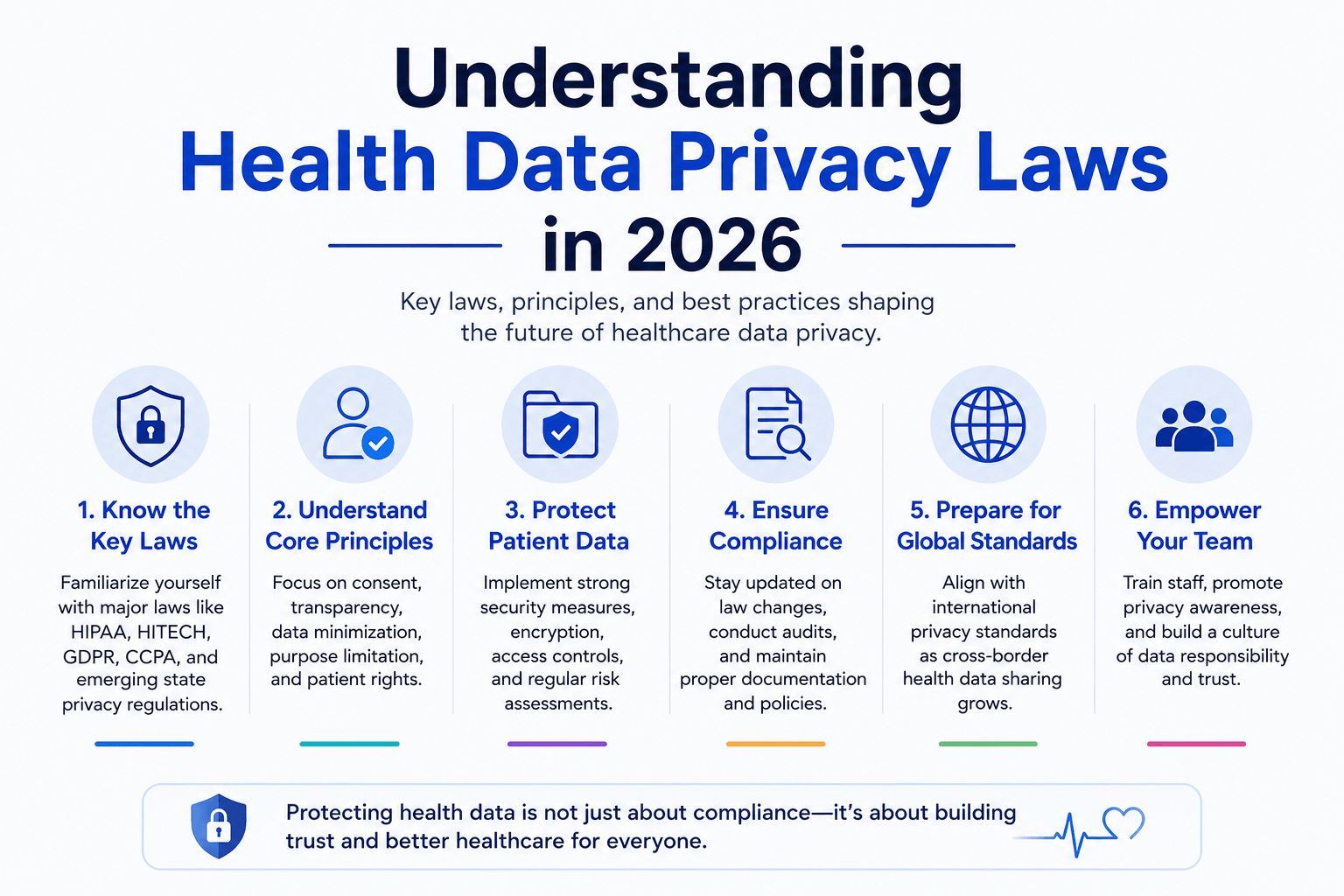
Understanding Health Data Privacy Laws in 2026
Understanding Health Data Privacy Laws in 2026
Health data privacy laws are crucial in safeguarding individual health information from unauthorized access or misuse. As of 2026, these laws have evolved significantly to address the growing concerns surrounding data security and privacy in the healthcare sector. With advancements in technology and increasing digitalization, understanding these laws is essential for both individuals and healthcare providers.
- Health data privacy laws protect sensitive patient information from misuse.
- Technological advancements challenge traditional privacy frameworks.
- Understanding these laws is vital for healthcare professionals and patients alike.
- India is developing its own regulations to enhance data privacy in healthcare.
- Compliance with privacy laws can prevent significant penalties for organizations.
What is Health Data Privacy?
Health data privacy refers to the legal and ethical principles governing the collection, storage, and sharing of personal health information. It encompasses various regulations and standards designed to protect sensitive health data from unauthorized access, misuse, or disclosure. These regulations are crucial in maintaining the trust of patients and ensuring that their personal information is handled with care.
The scope of health data privacy includes various types of information such as medical histories, treatment plans, and personal identifiers. Regulations like the Health Insurance Portability and Accountability Act (HIPAA) in the United States have set a precedent for data privacy laws globally. As healthcare systems become increasingly interconnected, the need for robust health data privacy laws has never been more critical.
In many countries, including India, health data privacy is governed by both national and international laws. For instance, the General Data Protection Regulation (GDPR) in the European Union has influenced how countries approach health data privacy. As we move into 2026, countries are adapting their laws to be more comprehensive and offer greater protection for individuals.
Why Does Health Data Privacy Matter?
Health data privacy is paramount for protecting individuals from identity theft and discrimination. When personal health information is exposed, it can lead to adverse consequences, including stigmatization or denial of services. For example, a patient’s mental health history could be used against them in employment decisions if not adequately protected, emphasizing the importance of privacy laws.
The implications of breaches in health data privacy extend beyond individual patients to healthcare organizations as well. Organizations that fail to comply with health data privacy regulations can face severe penalties, including fines and legal action. The financial and reputational damage from such breaches can be devastating, underscoring the need for stringent compliance measures.
Moreover, public trust in healthcare systems is closely tied to how well these systems protect personal data. If patients feel that their information is not secure, they may be reluctant to seek care or share necessary information with healthcare providers. This reluctance can negatively impact health outcomes and the overall effectiveness of the healthcare system.
Core Aspect 1: The Role of Technology in Health Data Privacy
Technology plays a dual role in health data privacy, acting both as a facilitator and a potential threat. On one hand, advancements in technology, such as electronic health records (EHRs) and telemedicine, improve patient care and data management. On the other hand, these technologies can introduce vulnerabilities that may compromise data security.
For instance, while EHRs streamline the sharing of patient information among healthcare providers, they also increase the risk of unauthorized access. Cybersecurity threats, such as hacking and phishing, have become increasingly sophisticated, requiring healthcare organizations to invest in robust security measures. As of 2026, the need for comprehensive cybersecurity protocols is more critical than ever.
| Technology | Benefits | Risks |
|---|---|---|
| Electronic Health Records (EHRs) | Improved data sharing and patient management | Increased risk of unauthorized access |
| Telemedicine | Increased access to care | Potential for data breaches |
| Wearable Health Devices | Real-time health monitoring | Data privacy concerns |
Healthcare organizations must strike a balance between leveraging technology for improved patient care and ensuring robust privacy protections. This involves continuous training for staff on data security measures and investing in advanced cybersecurity technologies to safeguard sensitive information. The implications for healthcare organizations are profound, as compliance with data privacy laws can significantly affect their operational viability and reputation.
Core Aspect 2: International Regulations and Compliance
International regulations play a crucial role in shaping health data privacy laws across various jurisdictions. Laws such as the GDPR have set high standards for data protection, influencing countries worldwide to adopt similar frameworks. These regulations emphasize the importance of obtaining patient consent before collecting or processing personal health information.
In addition to GDPR, the Health Insurance Portability and Accountability Act (HIPAA) in the United States has established critical standards for protecting health information. HIPAA mandates that healthcare organizations implement safeguards to protect patient data and report breaches when they occur. As countries move towards 2026, they are increasingly aligning their health data privacy laws with these international standards.
| Regulation | Key Features | Geographical Scope |
|---|---|---|
| GDPR | Strong consent requirements, data protection officers | European Union |
| HIPAA | Privacy and security regulations for health information | United States |
| PDPA | Personal data protection framework | Singapore |
As health data privacy laws continue to evolve, organizations must stay informed about international regulations that may impact their operations. Non-compliance can lead to heavy fines and legal consequences. For example, under GDPR, organizations can be fined up to 4% of their annual global turnover for severe breaches, highlighting the need for compliance strategies to mitigate risks.
Core Aspect 3: The Future of Health Data Privacy in 2026
The landscape of health data privacy is expected to undergo significant changes by 2026, driven by technological advancements and evolving societal expectations. As patients become more aware of their rights regarding data privacy, they are demanding greater transparency and control over their personal information. This shift is prompting healthcare organizations to adopt more patient-centric approaches to data management.
Moreover, the integration of artificial intelligence (AI) in healthcare is likely to raise new privacy concerns. AI systems often require vast amounts of data to function effectively, which can lead to potential breaches if not managed correctly. Organizations must therefore develop ethical guidelines and protocols to ensure that AI applications in healthcare respect patient privacy.
| Trend | Implications | Action Required |
|---|---|---|
| Patient-Centric Approaches | Increased trust and engagement | Develop transparent data policies |
| AI Integration | New privacy challenges | Establish ethical guidelines |
| Regulatory Changes | Need for compliance updates | Monitor international regulations |
Looking ahead, organizations must proactively address these trends to ensure compliance with emerging regulations. This involves not only updating policies but also fostering a culture of privacy within organizations. Training staff on data ethics and privacy is essential for maintaining compliance and building trust with patients.
India Perspective
In India, health data privacy is gaining increasing attention as the government works to develop comprehensive regulations. The Personal Data Protection Bill, which is expected to be enacted soon, aims to establish a framework for data protection that aligns with international standards. This bill will have significant implications for how health data is managed in India.
As healthcare providers adapt to these regulations, there will be a need for investment in technology and training to ensure compliance. Organizations must develop systems that protect patient data while maintaining accessibility for healthcare professionals. The potential costs associated with non-compliance can be substantial, making it imperative for organizations to prioritize data privacy.
Furthermore, local technology solutions are emerging to address health data privacy in India. Platforms that focus on secure patient data management and compliance with regulatory frameworks are gaining popularity. By investing in such technologies, healthcare organizations can enhance their data protection measures and build trust with patients.
Common Mistakes
- Neglecting Staff Training: Many organizations underestimate the importance of training staff on data privacy. Staff must understand the implications of mishandling data and the importance of compliance with regulations.
- Failing to Monitor Compliance: Regular audits and monitoring are essential for ensuring compliance with health data privacy laws. Organizations that fail to conduct these checks may face penalties.
- Ignoring Emerging Technologies: Organizations must stay informed about new technologies and their implications for data privacy. Ignoring these developments can lead to vulnerabilities in data security.
- Not Engaging with Patients: Failing to communicate with patients about their data rights can erode trust. Organizations must engage with patients and be transparent about data handling practices.
- Overlooking Data Breach Protocols: Having a data breach response plan is critical. Organizations that do not prepare for potential breaches may struggle to respond effectively when an incident occurs.
Frequently Asked Questions
What are health data privacy laws?
Why is health data privacy important?
What international regulations impact health data privacy?
How is India addressing health data privacy?
What are common mistakes in health data privacy compliance?
Stay Updated
Get the latest posts delivered to your inbox.
Related Posts
10 Essential Health Tips for a Balanced Diet in 2026
Explore 10 essential health tips to maintain a balanced diet in 2026, focusing on nutrition, wellness, and practical...
The Future of AI in Healthcare: Will It Replace Doctors in 2026?
Explore the transformative role of AI in healthcare and whether it can replace doctors by 2026. Understand its...
The Impact of Nutrition on Mental Health: A Comprehensive Overview
Explore how nutrition influences mental health, highlighting its importance, core aspects, and the Indian perspective...