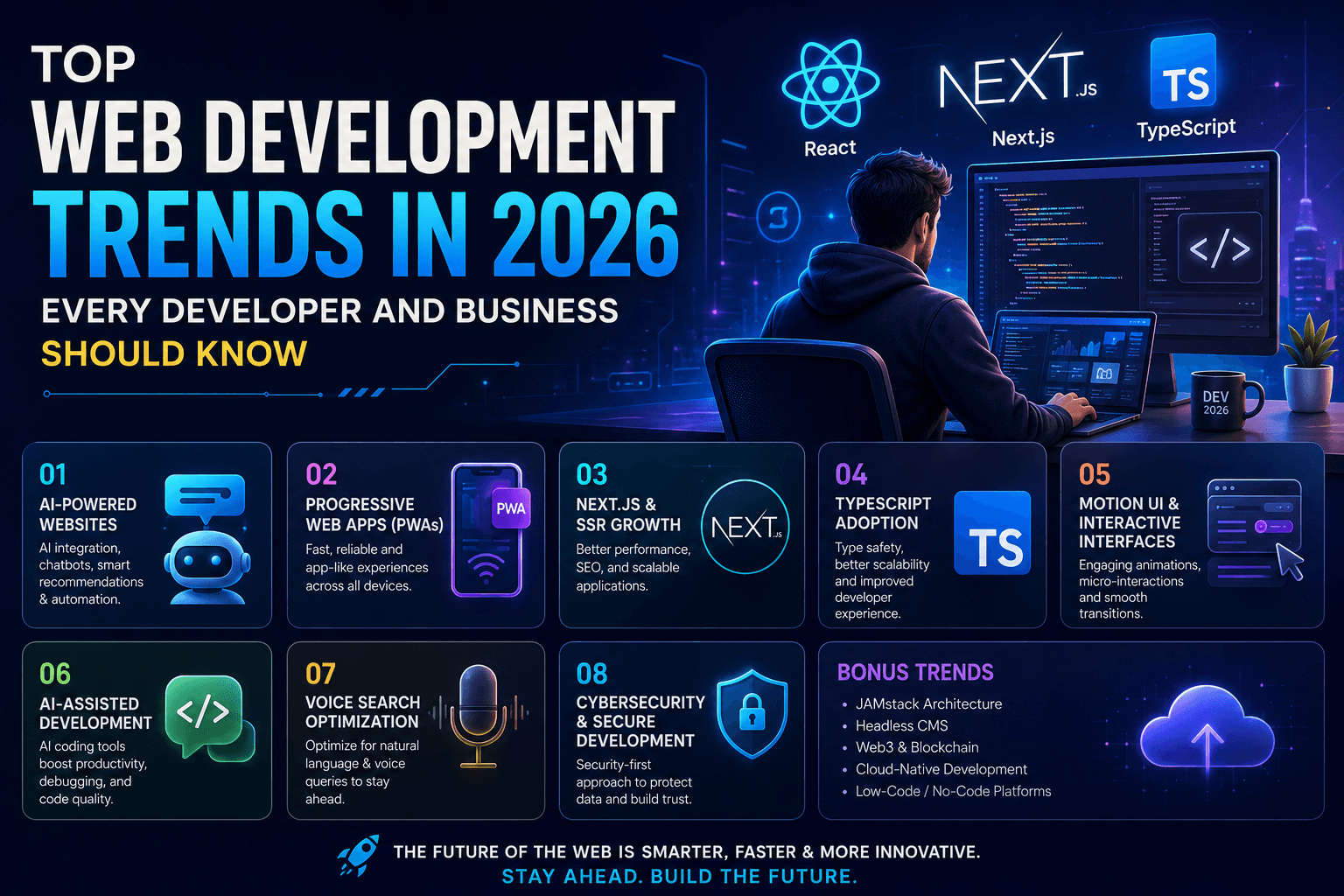
Top Web Development Trends in 2026 Every Developer and Business Should Know
Opening
As we look ahead to 2026, the landscape of web development is rapidly evolving. Developers and businesses need to stay informed about emerging trends that will shape the digital experience. This article outlines the most significant web development trends for 2026, emphasizing their importance and implications for the industry.
- AI and machine learning will enhance user personalization and automation.
- Progressive web apps (PWAs) will continue to bridge the gap between web and mobile experiences.
- Serverless architecture will simplify deployment and scalability for developers.
- Cybersecurity will remain a top priority amid increasing digital threats.
- Low-code and no-code platforms will empower non-developers to create web applications.
What is Web Development?
Web development refers to the process of creating and maintaining websites and web applications. This encompasses various tasks, including web design, coding, and content management. Developers utilize a range of programming languages and frameworks to build interactive and functional web solutions.
The field of web development can be divided into two main categories: front-end and back-end development. Front-end development focuses on the visual aspects of a website, ensuring it is user-friendly and engaging. In contrast, back-end development deals with server-side operations, database interactions, and application logic.
In recent years, web development has expanded beyond traditional coding, incorporating frameworks and libraries that streamline the development process. This evolution is vital as businesses seek efficient and effective ways to reach their digital audiences.
Why Does Web Development Matter?
Web development is crucial for businesses in today’s digital-first landscape. A well-developed website serves as a central hub for customer engagement, allowing organizations to present their products and services effectively. This online presence can significantly impact brand visibility and customer acquisition.
Moreover, the quality of web development affects user experience (UX), which directly influences customer satisfaction and retention. A website that is slow, unresponsive, or difficult to navigate can deter potential customers, resulting in lost revenue. Investing in robust web development ensures that users have a seamless experience, fostering loyalty and encouraging return visits.
Lastly, as technology evolves, so do user expectations. Businesses must adapt to stay relevant, using modern web development practices to meet the demands of their audience. This adaptability can lead to a competitive advantage in increasingly crowded markets.
Artificial Intelligence Integration
One of the most significant trends in web development for 2026 is the integration of artificial intelligence (AI). AI technologies are being utilized to enhance user personalization, automate processes, and improve overall website functionality. This shift allows developers to create more intuitive and engaging experiences for users.
For example, AI-driven chatbots are becoming commonplace on websites, providing instant customer service and support. These bots can understand user inquiries and provide relevant information, improving response times and user satisfaction. Businesses can save on operational costs while enhancing customer service through AI.
Additionally, AI can analyze user behavior to generate personalized content recommendations. By studying patterns and preferences, AI algorithms can suggest products or services tailored to individual users, increasing conversion rates. This level of personalization is becoming essential as users expect more from their online interactions.
| AI Integration Benefits | Examples |
|---|---|
| Enhanced User Experience | AI chatbots providing instant support |
| Personalized Content | Product recommendations based on user behavior |
| Automated Processes | AI tools for website analytics and optimization |
Progressive Web Applications (PWAs)
Progressive Web Applications (PWAs) are another key trend shaping web development in 2026. PWAs combine the best features of mobile apps and websites, offering a seamless experience across devices. They load quickly, work offline, and provide an app-like feel, making them an attractive option for businesses.
One of the main advantages of PWAs is their ability to reach a broader audience. Unlike traditional mobile apps, PWAs do not require installation from app stores, allowing users to access them directly from their browsers. This accessibility can lead to increased user engagement and retention.
Furthermore, PWAs can significantly improve performance and load times, which are critical factors for user satisfaction. A faster website leads to lower bounce rates and higher conversion rates, making PWAs a strategic choice for businesses looking to enhance their digital presence.
| Benefits of PWAs | Description |
|---|---|
| Cross-Platform Compatibility | PWAs work on any device with a browser |
| Offline Functionality | Users can access content without an internet connection |
| Improved Performance | Faster load times enhance user experience |
Serverless Architecture
Serverless architecture is becoming increasingly popular among developers as it simplifies the deployment and management of web applications. With serverless computing, developers can focus on writing code without worrying about the underlying infrastructure. This approach reduces the complexity of deploying applications and allows for greater scalability.
One of the benefits of serverless architecture is that it allows businesses to pay only for the resources they use. This model can lead to significant cost savings, particularly for startups and smaller companies that may not have the budget for extensive server infrastructure. As a result, businesses can allocate resources more efficiently and scale operations based on demand.
Moreover, serverless architecture promotes rapid development cycles, enabling teams to iterate quickly and deploy updates more frequently. This agility is critical in today’s fast-paced digital environment, where user needs and market trends can shift rapidly.
| Advantages of Serverless Architecture | Details |
|---|---|
| Cost Efficiency | Pay-as-you-go model reduces operational costs |
| Scalability | Easily scale applications based on demand |
| Faster Development | Quick iterations and deployments |
India Perspective
The web development landscape in India is thriving, with numerous startups and established companies embracing new technologies. As businesses increasingly recognize the importance of a strong online presence, web development trends like AI integration and PWAs are gaining traction in the Indian market.
In terms of costs, web development services in India are often more affordable than in many Western countries. For example, hiring a skilled developer in India can range from ₹15,000 to ₹50,000 per month, depending on their expertise and experience. This cost-effectiveness allows Indian businesses to invest in high-quality web development solutions without breaking the bank.
Moreover, the Indian government has been promoting digital initiatives, which encourages businesses to adopt modern web development practices. Regulations and policies supporting digital transformation are paving the way for a more robust web development ecosystem, fostering innovation and growth.
Common Mistakes
- Neglecting Mobile Optimization: Many developers still focus primarily on desktop versions, ignoring the mobile experience. With the increasing use of mobile devices, a responsive design is crucial.
- Overcomplicating Designs: Developers sometimes create overly complex interfaces that confuse users. Simple, intuitive designs typically lead to better user experiences.
- Ignoring SEO Best Practices: Failing to optimize for search engines can lead to low visibility. Implementing SEO strategies from the start is essential for attracting organic traffic.
- Not Prioritizing Security: Web applications are often targeted by cyber threats. Implementing robust security measures is vital to protect user data and maintain trust.
- Forgetting About User Testing: Developers may skip user testing, leading to unaddressed usability issues. Regular testing with real users can provide valuable feedback and improve the final product.
Frequently Asked Questions
What are the major web development trends for 2026?
Why is web development important for businesses?
How does AI improve web development?
What are progressive web apps?
Stay Updated
Get the latest posts delivered to your inbox.
Related Posts
Is This How We'll Build Websites Soon? Exploring webMCP Live Demo
Discover how webMCP is set to revolutionize website development and AI integration in 2026. Explore its features and...
Exploring New Methods for Desalination in 2026
Learn about innovative desalination methods transforming ocean water into drinking water, addressing global water...