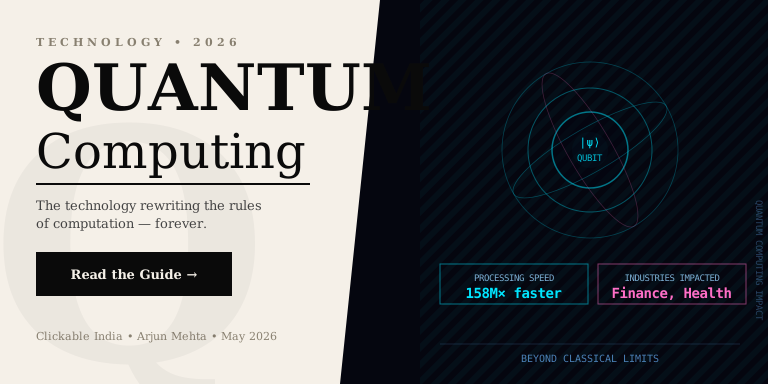
The Revolutionary Impact of Quantum Computing
Quantum computing represents a monumental shift in the field of computation, leveraging the principles of quantum mechanics to solve complex problems that are currently intractable for classical computers. It holds the promise of revolutionizing industries by enabling faster processing speeds and enhanced computational capabilities. As researchers and companies race towards practical applications, understanding quantum computing's potential impact becomes increasingly vital.
- Quantum computing harnesses quantum bits (qubits) for superior processing power.
- It has the potential to solve complex problems in various fields, including cryptography and drug discovery.
- Governments and tech giants are investing significantly in quantum research.
- Real-world applications are emerging, with implications for industries worldwide.
- India is positioning itself as a key player in the quantum computing landscape.
What is Quantum Computing?
Quantum computing is a field of study that focuses on developing computers based on the principles of quantum mechanics. Unlike classical computers, which use bits as the smallest unit of data (0s and 1s), quantum computers use quantum bits or qubits, which can exist in multiple states simultaneously. This unique property enables quantum computers to perform a vast number of calculations at once, significantly increasing their processing power and efficiency.
The fundamental concept behind quantum computing lies in phenomena such as superposition and entanglement. Superposition allows qubits to be in multiple states at once, while entanglement creates a relationship between qubits, meaning the state of one qubit can depend on the state of another, regardless of the distance separating them. These characteristics enable quantum computers to tackle complex problems more efficiently than classical computers.
Research and development in quantum computing are rapidly advancing, with many organizations exploring its potential applications. From cryptography to optimization problems, the ability of quantum computers to process vast amounts of data in parallel could lead to breakthroughs in numerous fields. As the technology matures, understanding its implications is essential for both businesses and consumers.
Why Does Quantum Computing Matter?
The significance of quantum computing extends beyond theoretical interest; it has the potential to transform entire industries. One of the most compelling reasons for its importance is its ability to solve problems that are currently unsolvable or would take an impractical amount of time for classical computers. For instance, complex optimization problems in logistics, finance, and manufacturing could see substantial improvements in efficiency and cost-effectiveness.
Moreover, quantum computing could revolutionize the field of cryptography. The ability to break widely used encryption methods could lead to a complete overhaul of how data security is approached. This disruption necessitates the development of new cryptographic methods that can resist attacks from quantum computers, fundamentally changing the landscape of cybersecurity.
Lastly, quantum computing holds the promise of advancing scientific research. From simulating molecular structures for drug discovery to solving complicated mathematical problems in physics, the potential applications are vast. As researchers continue to explore the capabilities of quantum computing, the impact on scientific discovery and innovation could be profound.
Applications of Quantum Computing
Quantum computing has a wide range of applications across various fields. Here are some prominent areas where quantum computing is making significant strides:
| Field | Potential Applications | Benefits |
|---|---|---|
| Cryptography | Breaking traditional encryption, developing quantum-resistant algorithms | Enhanced security, new cryptographic protocols |
| Drug Discovery | Simulating molecular interactions, optimizing drug formulations | Faster development of new drugs, reduced costs |
| Finance | Portfolio optimization, risk analysis, fraud detection | Improved investment strategies, enhanced security |
| Logistics | Route optimization, supply chain management | Increased efficiency, reduced operational costs |
These applications illustrate just a fraction of the potential impact of quantum computing. As the field progresses, the list of industries that could benefit will likely expand. The ability to process complex data in ways that classical computers cannot makes quantum computing a game-changer.
Challenges Facing Quantum Computing
Despite its promise, quantum computing faces several challenges that must be addressed for it to reach its full potential. One major hurdle is the issue of qubit stability, as qubits are highly susceptible to environmental interference, leading to errors in calculations. Developing error-correcting codes and more stable qubit designs is crucial for advancing this technology.
Another challenge involves the complexity of programming quantum computers. Quantum algorithms are fundamentally different from classical algorithms, requiring new approaches to software development. Researchers are working on creating user-friendly programming languages and environments to facilitate the adoption of quantum computing.
Finally, the high cost of building and maintaining quantum computers presents a significant barrier to widespread adoption. Current quantum systems require specialized environments and equipment, making them accessible primarily to well-funded research institutions and corporations. As the technology matures, reducing costs will be critical for enabling broader access.
India Perspective
India is increasingly recognizing the importance of quantum computing and has taken significant steps to establish itself in this emerging field. The Indian government announced a quantum mission aimed at developing quantum technologies and applications, with investments directed towards research and development. This initiative reflects a commitment to advancing quantum computing capabilities within the country.
Several Indian institutions are actively involved in quantum research, including the Indian Institute of Science (IISc) and the Indian Institute of Technology (IIT) networks. These institutions are working on various aspects of quantum computing, from theoretical foundations to practical applications. Collaborations with international partners further enhance India's position in the global quantum landscape.
Additionally, Indian startups are beginning to emerge in the quantum computing space, focusing on software development, quantum algorithms, and other innovative solutions. As these companies grow, they will play a crucial role in shaping the future of quantum computing in India and beyond, potentially leading to advancements in industries such as healthcare, finance, and cybersecurity.
Common Mistakes
- Overestimating Current Capabilities: Many people assume quantum computers can solve all problems immediately. In reality, they are still in the experimental stage and not yet ready for widespread use.
- Confusing Quantum with Classical Computing: Quantum computing is fundamentally different from classical computing, and equating the two can lead to misunderstandings about their capabilities and applications.
- Neglecting the Importance of Research: Some may overlook the need for ongoing research and development in quantum computing, which is essential for overcoming current challenges and unlocking its potential.
- Ignoring Security Implications: As quantum computing advances, the potential for breaking classical encryption methods is significant. Failing to address these security challenges could lead to serious vulnerabilities.
- Underestimating Timeframes: Many enthusiasts expect rapid advancements in quantum computing. However, significant breakthroughs take time, and realistic timelines are necessary for expectations.
Frequently Asked Questions
What is quantum computing?
How does quantum computing differ from classical computing?
What are the potential applications of quantum computing?
Why is quantum computing important for India?
Stay Updated
Get the latest posts delivered to your inbox.
Related Posts
Is This How We'll Build Websites Soon? Exploring webMCP Live Demo
Discover how webMCP is set to revolutionize website development and AI integration in 2026. Explore its features and...
Exploring New Methods for Desalination in 2026
Learn about innovative desalination methods transforming ocean water into drinking water, addressing global water...