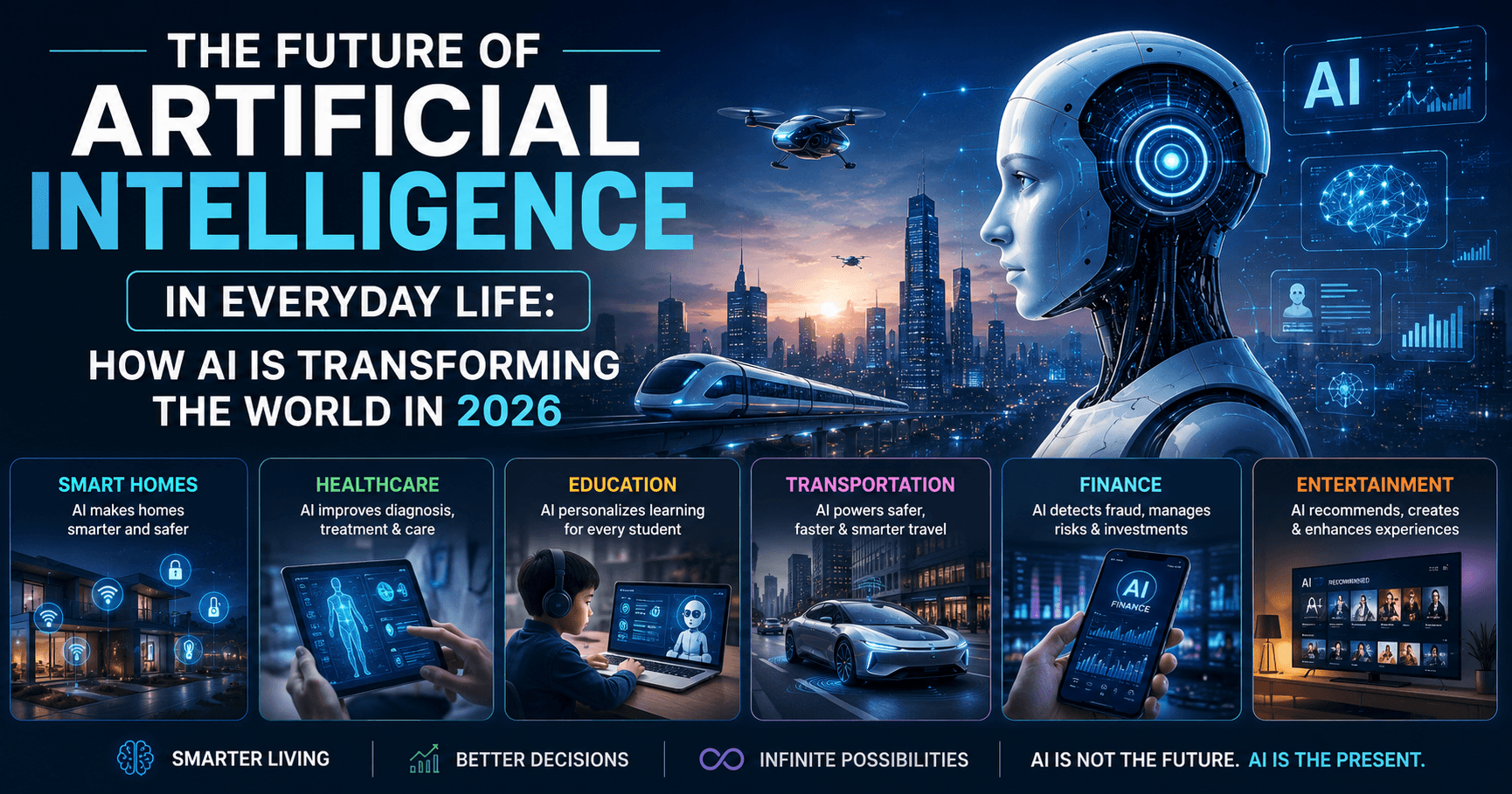
The Future of Artificial Intelligence in Everyday Life: How AI Is Transforming the World in 2026
Artificial Intelligence (AI) is rapidly evolving and is poised to fundamentally change everyday life by 2026. From enhancing personal convenience to transforming industries, AI's influence will be pervasive and profound. As we look ahead, understanding these changes can help us navigate the future with greater confidence and adaptability.
- AI will enhance personalization in consumer services, making experiences more tailored.
- Automation will redefine job roles, requiring new skills and adaptability from the workforce.
- AI will significantly impact healthcare, improving diagnosis and treatment methodologies.
- Privacy and ethical considerations will be crucial as AI continues to evolve.
- The integration of AI in smart homes will lead to greater efficiency and convenience.
What is Artificial Intelligence?
Artificial Intelligence (AI) refers to the simulation of human intelligence in machines that are programmed to think and learn like humans. This technology is designed to perform tasks that typically require human intelligence, such as recognizing speech, making decisions, and translating languages. At its core, AI encompasses various subfields, including machine learning, natural language processing, and robotics, each contributing to the overall capability of AI systems.
Machine learning, a subset of AI, involves the use of algorithms that enable machines to learn from data and improve their performance over time without being explicitly programmed. This ability to learn and adapt is what differentiates AI from traditional programming. Natural language processing (NLP), another crucial component, allows machines to understand and process human language, making interactions with technology more intuitive and seamless.
As technology progresses, AI is becoming increasingly integrated into various aspects of daily life. From virtual assistants like Siri and Alexa to recommendation algorithms on streaming platforms, AI is influencing how we interact with technology and consume information. By 2026, the expectation is that AI will be even more embedded in our lives, leading to a transformative experience.
Why Does Artificial Intelligence Matter?
The significance of AI in modern society cannot be overstated. First and foremost, it has the potential to enhance efficiency across multiple sectors. By automating routine and repetitive tasks, AI allows human workers to focus on more complex and creative aspects of their jobs. This shift not only increases productivity but also improves job satisfaction as employees engage in more meaningful work.
Moreover, AI's capability to analyze vast amounts of data quickly and accurately can lead to better decision-making. For instance, businesses can leverage AI to analyze consumer behavior, enabling them to tailor products and services to meet customer needs more effectively. This level of personalization can improve customer satisfaction and loyalty, ultimately driving business success.
Another critical area where AI is making a difference is in healthcare. AI-powered tools can assist in early diagnosis and personalized treatment plans, significantly improving patient outcomes. By analyzing medical data and identifying patterns, AI can help healthcare providers make informed decisions, which is especially crucial in emergency situations where time is of the essence.
Personalization in Consumer Services
One of the most visible impacts of AI will be in personalization across consumer services. In retail, for example, AI algorithms will analyze customer data to provide tailored shopping experiences, recommending products based on past purchases and preferences. This level of personalization not only enhances the customer experience but also increases sales for businesses.
Similarly, in digital entertainment, AI will refine content recommendations on platforms like Netflix and Spotify, ensuring that users receive suggestions that align with their tastes. This personalization will extend beyond just recommendations; AI will also play a role in creating content, with algorithms capable of generating music, art, and even writing.
| Aspect | Impact of AI |
|---|---|
| Retail | Enhanced shopping experiences through personalized recommendations |
| Entertainment | Content tailored to individual tastes and preferences |
| Travel | Customized travel itineraries and suggestions based on user preferences |
| Healthcare | Personalized treatment plans and health management |
Workforce Transformation
As AI continues to advance, the workforce will undergo significant transformations. Many jobs involving routine tasks are likely to be automated, which can lead to job displacement. However, this also presents an opportunity for workers to upskill and adapt to new roles that AI cannot fulfill. Skills in critical thinking, creativity, and emotional intelligence will become increasingly valuable in the job market.
Moreover, companies will need to invest in training programs to help employees transition into roles that require a combination of human and AI collaboration. This shift emphasizes the importance of lifelong learning and adaptability in the workforce. Organizations that embrace this change and foster a culture of continuous learning will be better positioned to thrive in an AI-driven economy.
Additionally, the emergence of new job categories related to AI development and maintenance will create opportunities for professionals in data science, AI ethics, and machine learning. These roles will be essential in ensuring that AI systems are designed and implemented responsibly, addressing concerns related to bias, accountability, and transparency.
| Job Category | Role Description |
|---|---|
| Data Scientist | Analyzes data to help organizations make informed decisions |
| AI Ethicist | Ensures AI systems are developed and used responsibly |
| Machine Learning Engineer | Designs and develops AI models and algorithms |
| AI Trainer | Teaches AI systems to improve their performance |
Healthcare Advancements
The healthcare sector stands to benefit immensely from AI advancements. By 2026, AI is expected to play a pivotal role in diagnostics, treatment planning, and patient management. Machine learning algorithms can analyze medical imaging data, predicting conditions such as cancer or cardiovascular diseases at earlier stages, which can save lives.
Additionally, AI can help in personalizing treatment plans by analyzing patient data, including genetics, lifestyle, and previous treatment responses. This tailored approach can lead to better outcomes and more efficient use of healthcare resources. AI-driven tools can also assist in monitoring patients remotely, providing real-time insights into their health and alerting healthcare providers to potential issues.
Despite the numerous benefits, the integration of AI in healthcare raises ethical and regulatory concerns. Ensuring data privacy and security is crucial, as well as addressing potential biases in AI algorithms that could impact patient care. By 2026, it will be essential to establish robust frameworks to govern the use of AI in healthcare while maximizing its potential.
| Area | AI Application | Benefit |
|---|---|---|
| Diagnostics | Image analysis for early detection | Improved patient outcomes |
| Treatment | Personalized medicine planning | More effective treatments |
| Monitoring | Remote patient monitoring tools | Proactive healthcare management |
India Perspective
In India, the adoption of AI is gaining momentum across various sectors, including healthcare, agriculture, and education. The Indian government has recognized the potential of AI and is implementing initiatives to foster its growth. For instance, the National AI Strategy aims to position India as a global leader in AI innovation, promoting research and development, and creating an ecosystem conducive to AI advancements.
In the healthcare sector, Indian startups are leveraging AI to address challenges such as diagnostic accuracy and patient management. Companies are developing AI-driven solutions that enhance telemedicine services, making healthcare more accessible to remote areas. This integration not only improves patient outcomes but also reduces the burden on healthcare infrastructure.
Financially, while the investment in AI technologies may vary, the potential benefits, including increased efficiency and cost savings, are significant. The Indian market is witnessing a surge in AI-driven platforms, with many offering services at competitive prices. As these innovations continue to evolve, the Indian economy is expected to reap substantial benefits from AI integration.
Common Mistakes
- Underestimating AI Capabilities: Many individuals and businesses fail to recognize the full potential of AI, leading to missed opportunities for innovation and efficiency.
- Neglecting Ethical Considerations: The rapid development of AI can lead to ethical dilemmas; overlooking these can result in public distrust and regulatory backlash.
- Assuming AI Can Replace Humans: AI is a tool designed to assist humans, not replace them; understanding this can foster better collaboration.
- Failing to Invest in Training: Organizations must prioritize upskilling their workforce to thrive in an AI-driven landscape; neglecting this can lead to a skills gap.
- Ignoring Data Privacy: As AI relies heavily on data, failing to protect user privacy can lead to significant legal and reputational risks.
Frequently Asked Questions
What is the impact of AI on daily life?
How will AI affect jobs by 2026?
What are the ethical concerns surrounding AI?
How is AI being utilized in healthcare in India?
Stay Updated
Get the latest posts delivered to your inbox.
Related Posts
The Future of AI: Exploring Recursive Self-Improvement in 2026
Discover the implications of recursive self-improvement in AI technology and its potential impact on various sectors in...
Step-by-Step Guide to Building a Simple AI Application Using Python in 2026
Learn how to create a simple AI application using Python in 2026 with this detailed step-by-step guide. Perfect for...