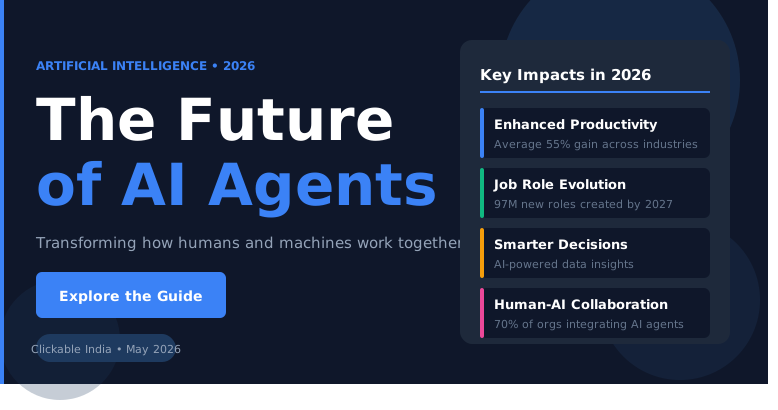
The Future of AI Agents: Transforming Work in 2026
The Future of AI Agents: Transforming Work in 2026
The future of AI agents is poised to revolutionize the workplace by 2026, introducing unprecedented efficiencies and capabilities. As businesses increasingly adopt advanced AI technologies, these agents will serve as intelligent assistants, enhancing productivity and decision-making. This transformation will not only streamline operations but also reshape the workforce by enabling employees to focus on higher-level tasks.
- AI agents will enhance productivity by automating routine tasks.
- These agents will improve decision-making through data analysis.
- Workforces will shift towards more strategic roles, focusing on creativity and problem-solving.
- Ethical considerations will play a crucial role in AI deployment in workplaces.
- India will be a significant player in the global AI market, leveraging local talent and innovations.
What are AI Agents?
AI agents are software programs that use artificial intelligence to perform tasks autonomously or assist humans in their work. These agents can analyze data, learn from user interactions, and adapt their responses based on the context of the task at hand. Essentially, they act as intermediaries between technology and users, streamlining processes and providing insights that would be difficult for humans to achieve alone.
At their core, AI agents leverage machine learning algorithms and natural language processing to understand and interpret user requests. This allows them to provide tailored responses and solutions to a variety of problems, from scheduling meetings to generating reports. For instance, chatbots are a common form of AI agents that can handle customer service inquiries, providing instant responses and freeing human agents for more complex issues.
The evolution of AI agents has been rapid, with advancements in machine learning and computing power driving their capabilities. As we look towards 2026, the expectation is that these agents will become even more sophisticated, capable of handling a broader range of tasks and integrating seamlessly with existing workflows.
Why Does AI Matter?
The significance of AI agents in the workplace cannot be overstated, as they promise to reshape how organizations operate. First and foremost, they enhance efficiency by automating mundane tasks that often consume valuable employee time. This allows human workers to redirect their efforts toward strategic initiatives that require creativity and critical thinking, ultimately leading to better business outcomes.
Moreover, AI agents can process and analyze vast amounts of data at speeds unattainable by humans. This capability enables organizations to make informed decisions based on real-time insights, significantly improving their responsiveness to market changes. For instance, a marketing team could use AI agents to analyze consumer behavior patterns and adjust campaigns on the fly, enhancing engagement and conversion rates.
Finally, the implementation of AI agents can lead to cost savings through increased productivity and reduced operational inefficiencies. By 2026, businesses that effectively integrate these agents may experience lower labor costs and higher output, giving them a competitive edge in their respective industries.
Automation of Routine Tasks
One of the core aspects of AI agents is their ability to automate routine tasks, which can significantly free up employee time. Tasks such as data entry, scheduling, and basic customer inquiries can be handled by AI agents, allowing human workers to focus on more complex responsibilities. This shift not only enhances productivity but also improves job satisfaction, as employees can engage in more meaningful work.
For example, consider the application of AI agents in human resources departments. These agents can automate the initial stages of recruitment by screening resumes and scheduling interviews, which traditionally are time-consuming tasks for HR personnel. By reducing the workload, HR teams can dedicate more time to developing employee engagement strategies and enhancing workplace culture.
| Task Type | Traditional Method | AI Agent Method |
|---|---|---|
| Data Entry | Manual input by employees | Automated data capture and entry |
| Scheduling | Back-and-forth emails | Automated scheduling through AI agents |
| Customer Queries | Human customer service representatives | Chatbots providing instant responses |
The implications of this automation are profound. Organizations can expect not only improved efficiencies but also reduced errors associated with manual input. As AI agents continue to evolve, their ability to learn from previous interactions will further enhance their performance, making them an invaluable asset in any workplace.
Improved Decision-Making
Another critical aspect of AI agents is their ability to improve decision-making processes within organizations. By harnessing large datasets, these agents can identify patterns and trends that might go unnoticed by human analysts. This capability allows businesses to make data-driven decisions that can lead to more successful outcomes.
AI agents can analyze customer feedback, sales data, and market trends to provide actionable insights. For instance, a retail company could utilize AI agents to determine which products are underperforming and suggest targeted promotions or inventory adjustments. Such insights enable companies to respond proactively to market demands rather than reactively.
| Data Type | Analysis Method | Outcome |
|---|---|---|
| Customer Feedback | Sentiment analysis | Product improvements |
| Sales Data | Trend analysis | Targeted marketing strategies |
| Market Trends | Predictive analytics | Informed strategic planning |
The ability of AI agents to provide real-time insights will be crucial in fast-paced industries such as finance and e-commerce, where decisions must be made quickly to maintain a competitive edge. With the right implementation, organizations can leverage AI agents to enhance their decision-making capabilities, ultimately leading to better business performance.
Ethical Considerations and Human-AI Collaboration
As AI agents become more integrated into the workplace, ethical considerations surrounding their use will become increasingly important. Issues such as data privacy, transparency, and bias in AI algorithms must be addressed to ensure that these technologies are used responsibly. Organizations will need to establish guidelines and best practices for AI deployment to mitigate potential risks.
Additionally, the collaboration between humans and AI agents will redefine job roles and responsibilities. While AI agents can handle routine tasks, human oversight will still be essential to ensure that the technology is used effectively and ethically. Training programs will likely evolve to include AI literacy, enabling employees to work alongside these agents effectively.
In the Indian context, the government has already begun to address these ethical considerations through initiatives aimed at promoting responsible AI development. As businesses in India increasingly adopt AI technologies, they will need to navigate these regulations to ensure compliance while reaping the benefits of AI agents.
India Perspective
India is positioned to be a significant player in the global AI landscape, with a growing number of startups and tech companies focused on developing AI solutions. As of 2023, the Indian AI market was valued at approximately $7.8 billion and is expected to grow significantly in the coming years. This growth presents opportunities for local companies to leverage AI agents in various sectors, including finance, healthcare, and education.
Moreover, the Indian government is actively promoting AI adoption through initiatives such as the National AI Strategy, which aims to boost AI research and development while addressing ethical concerns. This regulatory framework will provide guidance for businesses looking to implement AI agents responsibly.
In practical terms, Indian companies are already utilizing AI agents to enhance their operations. For example, several banks have deployed AI chatbots for customer service, significantly improving response times and customer satisfaction rates. Such real-world applications demonstrate the potential of AI agents to transform industries across India.
Common Mistakes
- Overlooking Data Privacy: Many organizations fail to prioritize data privacy when implementing AI agents, risking sensitive information exposure.
- Neglecting Employee Training: Insufficient training can lead to ineffective use of AI agents, undermining their potential benefits.
- Ignoring Ethical Guidelines: Companies that do not adhere to ethical standards may face backlash and legal consequences.
- Underestimating Change Management: Transitioning to AI-driven processes requires careful change management to ensure employee buy-in and acceptance.
- Focusing Solely on Cost Reduction: While cost savings are important, organizations should also consider the quality and effectiveness of AI agents.
Frequently Asked Questions
What are AI agents?
How will AI agents impact decision-making?
What ethical considerations are involved in using AI agents?
How is India leveraging AI agents?
What common mistakes do organizations make with AI agents?
Stay Updated
Get the latest posts delivered to your inbox.
Related Posts
Is This How We'll Build Websites Soon? Exploring webMCP Live Demo
Discover how webMCP is set to revolutionize website development and AI integration in 2026. Explore its features and...
5 High Paying Tech Jobs for Freshers in 2026
Explore the top five high-paying tech jobs for freshers in 2026, including salary insights and industry demand.
Exploring New Methods for Desalination in 2026
Learn about innovative desalination methods transforming ocean water into drinking water, addressing global water...