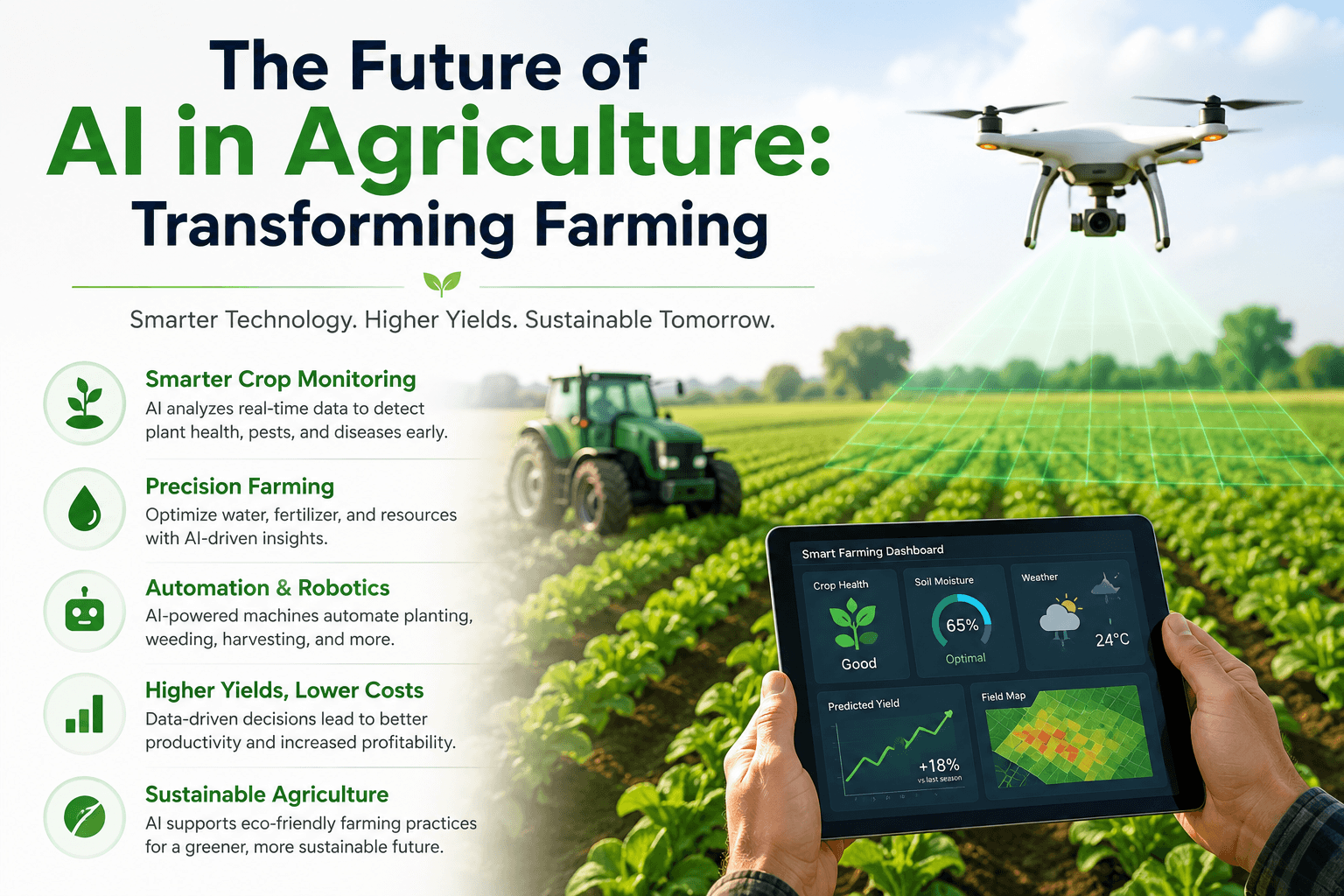
The Future of AI in Agriculture: Transforming Farming
The Future of AI in Agriculture: Transforming Farming
The future of artificial intelligence (AI) in agriculture is poised to transform farming practices, making them more efficient, sustainable, and productive. By integrating AI technologies, farmers can optimize resource use, improve crop yields, and manage their operations more effectively. This transformation not only promises to enhance food security but also to address pressing environmental challenges.
- AI is revolutionizing agriculture through precision farming and data analytics.
- It enhances resource management, leading to sustainable practices.
- AI applications can predict weather patterns and optimize planting schedules.
- The integration of AI tools can improve crop yield and quality significantly.
- India stands to benefit from AI in agriculture, addressing local challenges.
What is AI in Agriculture?
AI in agriculture refers to the use of artificial intelligence technologies to enhance farming practices and operations. This includes machine learning algorithms, computer vision, and robotics, which help in analyzing data and making informed decisions about farming. The goal is to increase productivity, reduce waste, and ultimately create a more sustainable agricultural system.
AI systems can process vast amounts of data from various sources, such as satellite imagery, sensor networks, and weather forecasts. This data-driven approach allows farmers to gain insights into their fields, monitor crop health, and identify potential issues before they escalate. By leveraging AI, farmers can make precise decisions tailored to their specific needs and conditions.
In essence, AI in agriculture encompasses a wide range of applications—from autonomous tractors and drones to predictive analytics for crop management. These technologies work together to create an ecosystem that supports better farming practices and contributes to food security on a global scale.
Why Does AI in Agriculture Matter?
The significance of AI in agriculture cannot be overstated, especially in the context of growing global populations and increasing demands for food production. As traditional farming methods face limitations, AI offers innovative solutions to enhance efficiency and productivity. This is critical for meeting the needs of a world that is projected to reach nearly 10 billion people by 2050.
Moreover, AI helps address environmental challenges associated with agriculture, such as water scarcity, soil degradation, and excessive pesticide use. By enabling precision farming techniques, AI reduces resource wastage and minimizes the ecological footprint of agricultural practices. This is particularly important as climate change continues to impact weather patterns and crop yields.
Finally, the economic implications of AI in agriculture are substantial. Farmers who adopt AI technologies can see increased profits due to higher crop yields and reduced operational costs. This technological shift promotes economic growth within rural communities and can contribute to the overall stability of food systems.
Precision Farming
One of the core aspects of AI in agriculture is precision farming, which involves using technology to monitor and manage field variability in crops. Precision farming leverages AI-driven tools that gather and analyze data to enhance crop production and resource use efficiency. This methodology allows farmers to apply inputs, such as water, fertilizers, and pesticides, more accurately and effectively.
Key components of precision farming include:
- Remote Sensing: Drones and satellite imagery can provide real-time data on crop health, soil conditions, and moisture levels.
- Soil Monitoring: Sensors placed in the field can continuously monitor soil pH, nutrient levels, and moisture content.
- Variable Rate Technology (VRT): This technology allows farmers to apply inputs at variable rates based on the specific needs of different areas within a field.
By adopting these precision farming techniques, farmers can reduce costs, improve yield quality, and minimize environmental impact. Studies have shown that precision agriculture can increase crop yields by up to 20% while decreasing input costs by approximately 15%.
Predictive Analytics
Another significant aspect of AI in agriculture is predictive analytics, which utilizes historical data and machine learning algorithms to forecast future agricultural trends. Predictive analytics can help farmers make informed decisions regarding planting schedules, irrigation needs, and pest management strategies.
AI models analyze various data points, including weather patterns, soil conditions, and crop diseases, to predict outcomes and optimize farming practices. This proactive approach allows farmers to address potential issues before they arise, enhancing crop resilience and productivity.
Here are some benefits of using predictive analytics in agriculture:
- Improved Decision-Making: By utilizing data-driven insights, farmers can make better decisions regarding planting and resource allocation.
- Risk Mitigation: Predictive analytics helps farmers anticipate adverse weather conditions or pest infestations, allowing them to take preventive measures.
- Enhanced Crop Management: Understanding crop growth patterns enables farmers to optimize their management practices for better yields.
These advantages highlight the transformative potential of predictive analytics in agriculture, enabling farmers to operate more efficiently and sustainably.
Automated Farming Solutions
AI-powered automated farming solutions are revolutionizing the way agricultural tasks are performed. Automation in farming includes the use of robotics, autonomous vehicles, and smart machinery to perform repetitive and labor-intensive tasks. This technology enhances productivity and reduces the reliance on manual labor, which is increasingly becoming a challenge in many regions.
Examples of automated farming solutions include:
- Autonomous Tractors: These vehicles can operate without human intervention, performing tasks such as planting, tilling, and harvesting.
- Robotic Harvesters: Robots equipped with AI technology can identify ripe crops and harvest them efficiently, minimizing waste.
- Drone Technology: Drones are used for crop monitoring, spraying pesticides, and even planting seeds in hard-to-reach areas.
These automated solutions not only increase efficiency but also improve accuracy in farming operations. By reducing human error and enhancing operational capabilities, automated farming is poised to play a critical role in the future of agriculture.
India Perspective
In India, the integration of AI in agriculture holds great promise, given the country's diverse agricultural landscape and the challenges faced by farmers. The Indian agricultural sector employs a significant portion of the population and is vital for the country's economy. Yet, many farmers struggle with issues such as unpredictable weather, inadequate access to resources, and fluctuating market prices.
AI technologies can help Indian farmers address these challenges by providing them with data-driven insights and innovative solutions. For instance, AI-powered apps can assist farmers in making informed decisions about crop selection, irrigation practices, and pest control. Additionally, government initiatives are increasingly focusing on promoting the adoption of technology in agriculture, which can further enhance productivity.
Moreover, the cost of implementing AI solutions is becoming more accessible for Indian farmers as technology advances. With the rise of affordable sensors, drones, and mobile applications, farmers can leverage these tools without incurring prohibitive expenses. This democratization of technology can empower farmers to improve their livelihoods and contribute to national food security.
Common Mistakes
- Neglecting Data Quality: Farmers often overlook the importance of high-quality data in AI applications. Poor data can lead to inaccurate predictions and ineffective decision-making.
- Underestimating Training Needs: Many farmers underestimate the training required to effectively use AI tools. Proper training is essential to maximize the benefits of these technologies.
- Overlooking Local Context: Implementing AI solutions without considering local conditions can lead to failure. It's crucial to tailor AI applications to specific agricultural environments.
- Ignoring Integration Challenges: Farmers may struggle with integrating AI solutions into existing practices. A clear strategy for integration is necessary for successful implementation.
Frequently Asked Questions
How does AI improve crop yields?
What are the environmental benefits of AI in agriculture?
Can AI help in pest management?
What is the role of drones in agricultural AI?
Is AI technology affordable for small-scale farmers in India?
Stay Updated
Get the latest posts delivered to your inbox.
Related Posts
Is This How We'll Build Websites Soon? Exploring webMCP Live Demo
Discover how webMCP is set to revolutionize website development and AI integration in 2026. Explore its features and...
5 High Paying Tech Jobs for Freshers in 2026
Explore the top five high-paying tech jobs for freshers in 2026, including salary insights and industry demand.
Exploring New Methods for Desalination in 2026
Learn about innovative desalination methods transforming ocean water into drinking water, addressing global water...