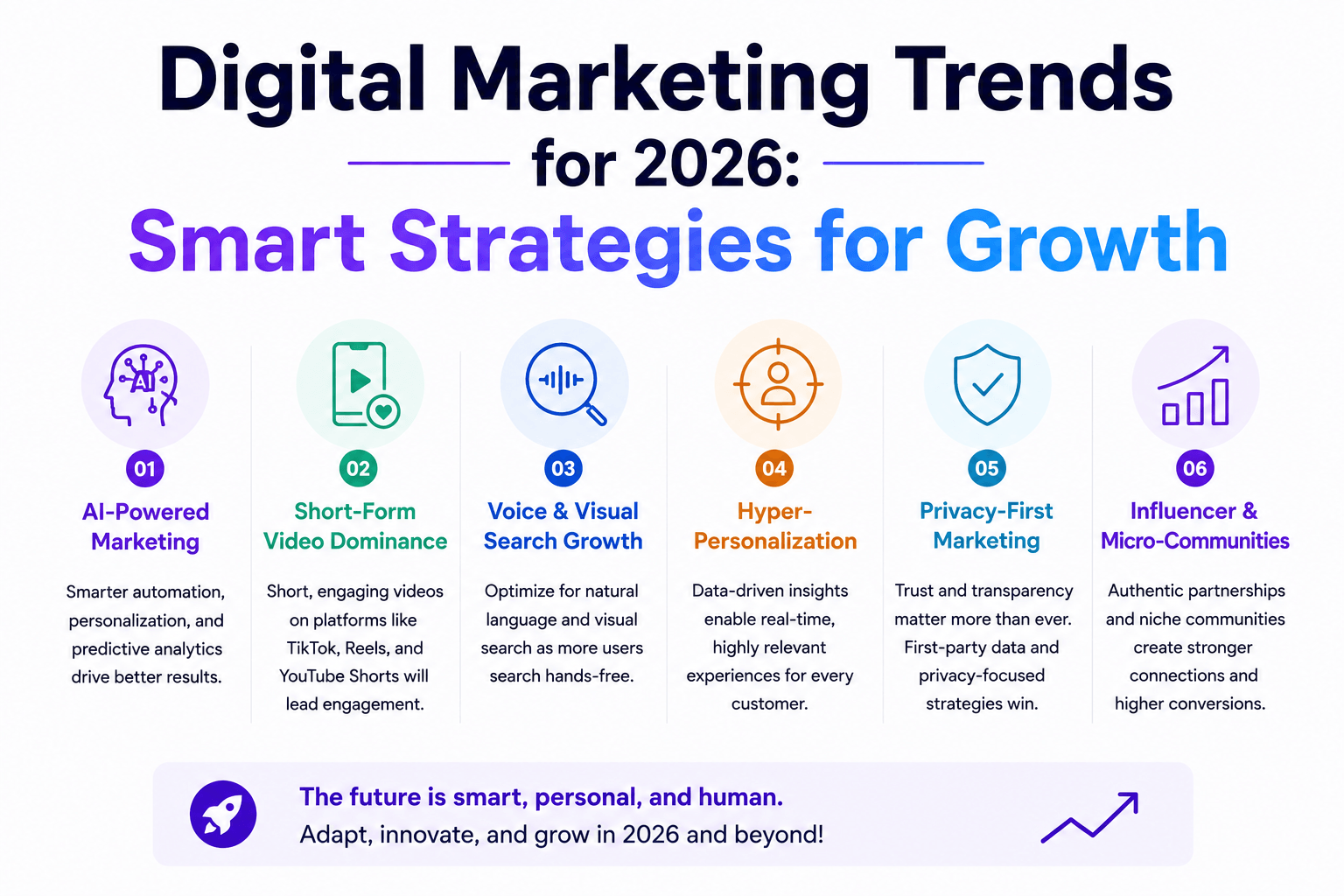
Digital Marketing Trends for 2026: Smart Strategies for Growth
Opening
As businesses prepare for 2026, understanding the evolving landscape of digital marketing is crucial for sustained growth. Anticipating trends such as AI integration, personalized content, and increased emphasis on sustainability can significantly influence marketing strategies. By adapting to these trends, companies can enhance their brand visibility and engagement with consumers.
- AI-driven strategies will revolutionize customer engagement.
- Personalization will play a pivotal role in content marketing.
- Sustainability will become a key focus for brands.
- Video content will dominate digital marketing channels.
- Data privacy will shape future marketing practices.
What is Digital Marketing?
Digital marketing refers to the use of digital channels to promote products and services to consumers. It encompasses various online platforms, including social media, search engines, email, and websites, to reach a targeted audience. The primary goal of digital marketing is to engage customers through tailored messages and build lasting relationships.
This marketing approach leverages technology to analyze consumer behavior and preferences, allowing businesses to optimize their strategies accordingly. Digital marketing includes various tactics, such as search engine optimization (SEO), content marketing, and pay-per-click advertising. These strategies aim to attract, convert, and retain customers in a cost-effective manner.
Ultimately, digital marketing is about creating an online presence and fostering engagement with consumers. By understanding the digital landscape and its dynamics, businesses can tailor their efforts to meet the evolving expectations of their target audience.
Why Does Digital Marketing Matter?
Digital marketing is essential in today’s marketplace due to the increasing reliance on the internet for information and shopping. As more consumers turn to online channels for their purchasing decisions, businesses must adapt to this shift to remain competitive. A robust digital marketing strategy helps companies reach potential customers where they spend most of their time – online.
Furthermore, digital marketing allows for precise targeting and measurement of campaigns, which traditional methods cannot match. Businesses can analyze data in real-time, enabling them to refine their strategies based on performance metrics. This level of insight allows for more efficient allocation of marketing resources, maximizing returns on investment.
Additionally, digital marketing fosters customer engagement through interactive platforms. Brands can communicate directly with their audience, offering personalized experiences and addressing customer concerns promptly. This two-way communication enhances brand loyalty and builds trust, which are crucial for long-term success.
AI-Driven Marketing Strategies
Artificial Intelligence (AI) is set to transform digital marketing in profound ways by automating processes and providing insights into consumer behavior. AI tools can analyze vast amounts of data to identify trends and predict customer preferences. For example, companies like Amazon use AI algorithms to recommend products based on previous purchases, significantly enhancing the customer shopping experience.
AI can also optimize advertising campaigns by targeting specific demographics more effectively. It enables marketers to create personalized ads that resonate with individual users, increasing the likelihood of engagement. Chatbots, powered by AI, further enhance customer service by providing instant responses to inquiries, making brands more accessible.
| AI Marketing Tool | Functionality | Benefits |
|---|---|---|
| Chatbots | Automates customer interactions | 24/7 service, reduced response time |
| Predictive Analytics | Forecasts customer behavior | Improved targeting, higher conversion rates |
| Content Creation Tools | Generates marketing content | Saves time, enhances creativity |
As AI continues to evolve, its integration into digital marketing will likely lead to more personalized and effective campaigns. Businesses that embrace these technologies can gain a competitive edge, driving growth and enhancing customer satisfaction.
Emphasis on Personalization
Personalization in digital marketing refers to tailoring content and experiences to meet individual consumer needs. By utilizing data analytics, businesses can segment their audience based on preferences, behaviors, and demographics. This targeted approach ensures that marketing messages resonate with the intended audience, leading to higher engagement rates.
For instance, email marketing campaigns that utilize personalized subject lines and content have shown to achieve significantly higher open and click-through rates. Brands like Netflix and Spotify excel in providing personalized content recommendations based on user behavior, enhancing user satisfaction.
| Personalization Strategy | Application | Expected Outcome |
|---|---|---|
| Dynamic Content | Website content changes based on user data | Higher engagement and conversion rates |
| Targeted Email Campaigns | Emails tailored to user preferences | Increased open and click-through rates |
| Product Recommendations | Suggest products based on past purchases | Enhanced customer satisfaction and loyalty |
As consumers increasingly expect personalized experiences, businesses that prioritize this strategy will likely see improved customer retention and brand loyalty. By leveraging data to craft tailored messages, brands can create meaningful connections with their audience.
Focus on Sustainability
With growing awareness of environmental issues, sustainability is becoming a critical component of digital marketing strategies. Consumers are increasingly drawn to brands that demonstrate a commitment to social responsibility and eco-friendly practices. Companies that incorporate sustainability into their marketing narratives can differentiate themselves in a crowded marketplace.
For instance, brands like Patagonia have successfully integrated sustainability into their core business model, appealing to environmentally-conscious consumers. By showcasing their eco-friendly practices and products, these brands not only attract customers but also foster brand loyalty among those who value sustainability.
| Sustainability Strategy | Implementation | Consumer Impact |
|---|---|---|
| Eco-Friendly Packaging | Using biodegradable materials | Increased customer trust |
| Transparency in Sourcing | Sharing information about supply chains | Enhanced brand loyalty |
| Community Initiatives | Supporting local environmental efforts | Positive brand perception |
As sustainability becomes a key focus for consumers, businesses that embrace eco-friendly practices and communicate their efforts effectively will likely gain a competitive advantage. This shift not only benefits the environment but also enhances brand reputation and customer loyalty.
India Perspective
In India, the digital marketing landscape is evolving rapidly, driven by an increase in internet penetration and smartphone usage. As of recent years, India has witnessed a surge in digital consumers, making it imperative for businesses to adopt digital marketing strategies. Local companies can leverage platforms like WhatsApp, Facebook, and Instagram to reach their audience effectively.
The cost of digital marketing in India varies significantly based on the chosen platforms and strategies. For instance, social media advertising costs can range from ₹15 to ₹40 per click, depending on the target audience and competition. SMEs can benefit from cost-effective strategies such as influencer marketing, which has gained traction in India.
Moreover, Indian regulations surrounding digital marketing, such as data protection laws, are becoming increasingly stringent. Brands must ensure compliance with these regulations to maintain consumer trust and avoid penalties. By staying informed about regulatory changes, businesses can navigate the evolving landscape effectively and maintain a positive brand image.
Common Mistakes
- Neglecting Mobile Optimization: With the majority of internet users accessing content via mobile devices, failing to optimize for mobile can lead to a poor user experience and loss of potential customers.
- Ignoring Data Analytics: Not utilizing data analytics to inform marketing strategies can result in missed opportunities for engagement and conversion. Businesses should regularly analyze their campaigns to refine their approach.
- Overlooking Customer Engagement: Focusing solely on sales without engaging with customers can harm brand loyalty. Brands should prioritize building relationships and responding to customer inquiries promptly.
- Underestimating the Importance of Content Quality: Producing low-quality content can damage a brand's reputation. High-quality, relevant content is essential for attracting and retaining customers.
- Failing to Adapt to Trends: The digital marketing landscape is constantly changing. Businesses must stay updated on trends and adjust their strategies accordingly to remain competitive.
Frequently Asked Questions
What are the key digital marketing trends for 2026?
How does AI impact digital marketing?
Why is personalization important in marketing?
What role does sustainability play in marketing strategies?
Stay Updated
Get the latest posts delivered to your inbox.
Related Posts
Is This How We'll Build Websites Soon? Exploring webMCP Live Demo
Discover how webMCP is set to revolutionize website development and AI integration in 2026. Explore its features and...
5 High Paying Tech Jobs for Freshers in 2026
Explore the top five high-paying tech jobs for freshers in 2026, including salary insights and industry demand.
Exploring New Methods for Desalination in 2026
Learn about innovative desalination methods transforming ocean water into drinking water, addressing global water...