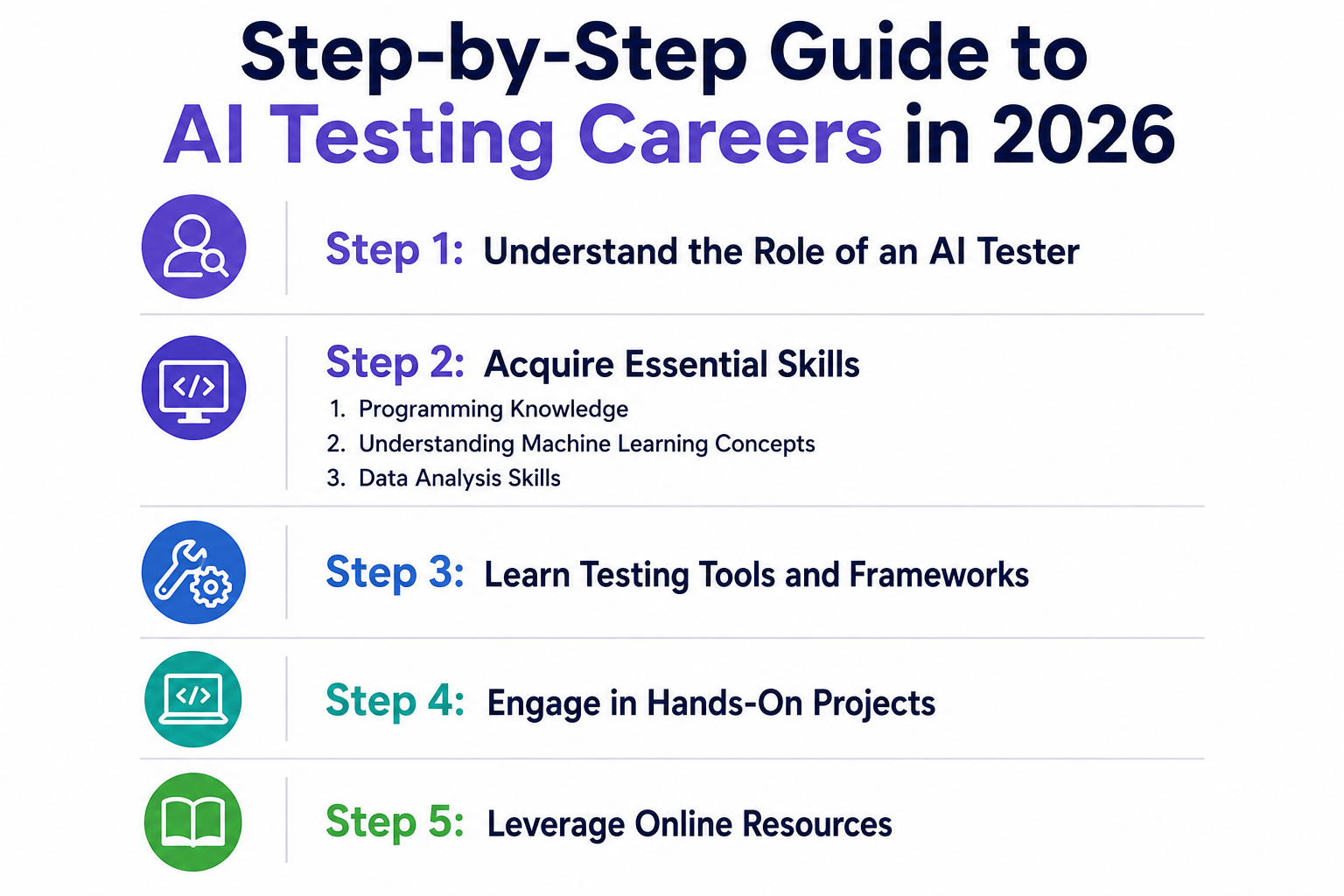
Step-by-Step Guide to AI Testing Careers in 2026
What You'll Learn
- Understanding the AI testing landscape and its importance.
- Key skills and prerequisites needed for a career in AI testing.
- A step-by-step guide to entering and advancing in the AI testing field.
- Common pitfalls to avoid during your AI testing career journey.
- India-specific tips and resources for aspiring AI testers.
Prerequisites
Before embarking on a career in AI testing, there are several prerequisites that you should consider. First and foremost, a solid foundation in software testing principles is essential. Familiarity with various testing methodologies, such as manual testing, automated testing, and performance testing, will be beneficial. Additionally, knowledge of programming languages like Python or Java can significantly enhance your capabilities in AI testing, as you may need to write scripts or use testing frameworks.
Furthermore, understanding basic concepts of artificial intelligence and machine learning is crucial. This includes familiarity with data structures, algorithms, and data preprocessing techniques. You can achieve this through online courses, workshops, or even formal education in computer science or related fields. Lastly, having a keen eye for detail and a problem-solving mindset will help you excel in this domain.
Step 1: Enhance Your Technical Skills
The first step toward a successful AI testing career is enhancing your technical skills. This involves not just learning programming languages, but also understanding how AI and machine learning models are built and deployed. Start by taking online courses that focus on the fundamentals of AI and machine learning, as well as testing practices tailored for AI systems.
Practical experience is crucial. Engage in projects where you can apply your knowledge. For instance, you can contribute to open-source AI projects or create your own projects using datasets available on platforms like Kaggle. This hands-on experience will deepen your understanding and improve your problem-solving skills.
# Example Python code for a simple AI model testing function
import numpy as np

# Function to test a machine learning model

def test_model(model, test_data, expected_output):
    predicti
    accuracy = np.mean(predicti expected_output)
    return accuracy
Moreover, make sure to familiarize yourself with testing frameworks that are commonly used in AI testing, such as PyTest for Python. This knowledge will not only help you in your role but also make you a more attractive candidate to potential employers.
Step 2: Understand AI Testing Methodologies
Once you've enhanced your technical skills, the next step is to understand various AI testing methodologies. AI testing is not entirely the same as traditional software testing; it requires specific approaches tailored to the unique challenges AI systems present. For instance, you should learn about model validation, bias detection, and performance testing for AI algorithms.
Familiarize yourself with different types of tests relevant to AI, such as unit tests, integration tests, and end-to-end tests. Understanding how to validate the functionality of AI models and ensure their reliability under varying conditions is critical. You may also want to explore concepts like explainability in AI, which focuses on making AI systems more transparent and understandable.
Additionally, consider creating a framework for AI testing that you can reference in future projects. This could be a checklist of questions to ask when evaluating an AI model or a set of best practices that you develop over time.
Step 3: Gain Experience through Internships and Projects
After building a solid foundation of skills and knowledge, gaining practical experience through internships or real-world projects is the next logical step. Look for internships that specifically focus on AI testing or quality assurance in tech companies. These positions will provide you with exposure to the professional world and help you build connections in the industry.
Networking is crucial, so attend industry conferences, webinars, and workshops related to AI and software testing. This not only helps you learn more but also opens up opportunities to meet potential employers or collaborators. Don't hesitate to reach out to professionals in the field for informational interviews or mentorship.
If internships are not readily available, consider working on personal projects or collaborating with peers to develop AI applications. Use platforms like GitHub to showcase your work, and don't forget to document your process. This portfolio will be invaluable when applying for jobs.
Step 4: Stay Updated with Industry Trends
The field of AI is rapidly evolving, and staying updated with the latest trends and technologies is essential for long-term success in your career. Follow influential blogs, podcasts, and online forums that focus on AI and software testing. This will not only keep you informed about new methodologies and tools but also provide insights into industry demands.
Consider obtaining certifications relevant to AI testing and quality assurance, as they can enhance your credibility. Certifications from recognized organizations can provide you with a competitive edge, especially when applying for positions in leading tech companies.
Lastly, engage with the community. Participate in online discussions, contribute to forums, and share your knowledge. This will help you build your personal brand and establish yourself as a knowledgeable professional in AI testing.
Common Mistakes and How to Avoid Them
- Neglecting Soft Skills: While technical skills are crucial, soft skills like communication and teamwork are equally important. Ensure you develop these skills alongside your technical abilities.
- Ignoring Continuous Learning: The AI landscape is always changing. Failing to keep your skills updated can lead to obsolescence. Allocate time regularly to learn about new advancements.
- Not Networking: Many opportunities arise from connections. Engage with professionals in the field through social media, industry events, or local meetups.
- Overlooking Testing Ethics: As AI systems can have significant societal impacts, understanding ethical considerations in AI testing is crucial. Always prioritize responsible testing practices.
- Skipping Documentation: Failing to document your processes and findings can lead to confusion later. Maintain clear records of your work to facilitate future learning and collaboration.
India-Specific Tips
In India, the demand for AI testing professionals has been on the rise, with many tech companies and startups looking for skilled individuals. As of 2023, the average salary for AI testers can range from INR 6,00,000 to INR 12,00,000 per annum, depending on experience and expertise. This trend is expected to continue into 2026 as AI adoption increases across various sectors.
There are several educational institutions and online platforms in India that offer courses specifically tailored to AI and software testing. Platforms like Coursera, Udacity, and edX provide access to courses from leading universities and industry experts. Additionally, local meetups and workshops can provide valuable networking opportunities and hands-on experience.
Frequently Asked Questions
What qualifications do I need to start a career in AI testing?
Are there specific tools I should learn for AI testing?
How important is experience in programming for AI testing?
What is the future of AI testing careers in India?
Stay Updated
Get the latest posts delivered to your inbox.
Related Posts
Is This How We'll Build Websites Soon? Exploring webMCP Live Demo
Discover how webMCP is set to revolutionize website development and AI integration in 2026. Explore its features and...
Exploring New Methods for Desalination in 2026
Learn about innovative desalination methods transforming ocean water into drinking water, addressing global water...