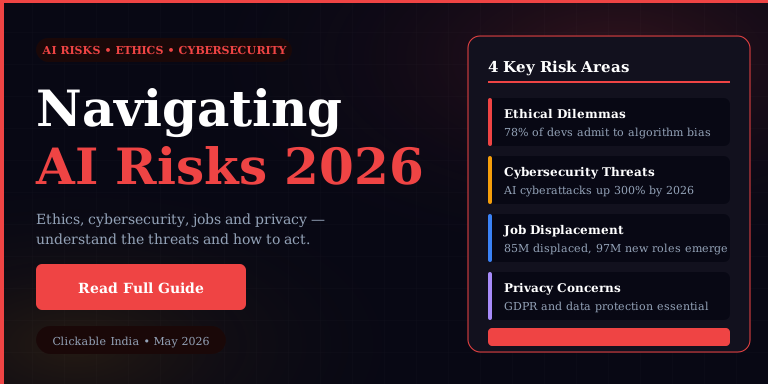
Navigating AI Risks: Key Concerns for 2026
As artificial intelligence (AI) continues to evolve and integrate into various sectors, understanding the associated risks becomes increasingly important. By 2026, these risks may significantly impact businesses, individuals, and society as a whole. This article delves into the key concerns related to AI, providing insights into what stakeholders need to watch for as we venture into this transformative era.
- AI risks encompass ethical, security, and societal concerns.
- Understanding these risks is vital for safe AI integration.
- Regulations may evolve to address AI-related challenges.
- Stakeholders must adopt proactive measures to mitigate risks.
- India's approach to AI risks may differ from global standards.
What is AI Risk?
AI risk refers to the potential negative outcomes associated with the deployment and utilization of artificial intelligence technologies. These risks can include ethical dilemmas, security vulnerabilities, and unintended societal consequences arising from AI systems. As AI becomes more prevalent in decision-making processes, understanding these risks is crucial for ensuring responsible development and implementation.
Ethical concerns in AI often revolve around issues such as bias, transparency, and accountability. For instance, if an AI system is trained on biased data, it may produce discriminatory outcomes, adversely affecting marginalized communities. This highlights the need for ethical frameworks that guide AI development, ensuring fairness and justice.
Additionally, security risks pose significant challenges as AI systems become more sophisticated. Cybersecurity threats, such as adversarial attacks, can compromise the integrity of AI models, leading to harmful consequences. Addressing these risks requires a multi-faceted approach, including robust security measures and ongoing monitoring of AI systems.
Why Does AI Risk Matter?
Understanding AI risks is essential because of their potential impact on individuals, organizations, and society. As AI technologies become more integrated into daily life, the consequences of their misuse or failure can be severe. For example, biased AI algorithms in hiring processes can reinforce existing inequalities, limiting opportunities for disadvantaged individuals.
The implications of AI risks extend to the economy and workforce as well. Automation powered by AI can lead to job displacement, necessitating a reevaluation of workforce skills and training programs. Ensuring a smooth transition for affected workers is critical for maintaining economic stability and social cohesion.
Furthermore, regulatory responses to AI risks are likely to evolve as governments recognize the need for oversight. In India, as in many countries, regulations may be established to address issues such as data privacy, algorithmic accountability, and ethical AI use. The development of such regulations will shape the future landscape of AI deployment, making it imperative for stakeholders to stay informed.
Ethical Concerns in AI
Ethical concerns in AI are paramount, as they directly affect the fairness and integrity of AI systems. One significant aspect is the issue of bias, where algorithms may unintentionally discriminate against certain groups. For instance, research has shown that facial recognition technologies can misidentify individuals from minority backgrounds at higher rates than others, raising critical ethical questions about their use in law enforcement and security.
To address these ethical challenges, developers and organizations must prioritize transparency in AI systems. This involves making the decision-making processes of AI algorithms understandable to users and stakeholders. For example, explainable AI techniques allow users to comprehend how an AI arrived at a particular conclusion, fostering trust and accountability.
| Ethical Concern | Description | Potential Impact |
|---|---|---|
| Bias | Discriminatory outcomes due to biased training data | Reinforcement of societal inequalities |
| Transparency | Lack of clarity in AI decision-making processes | Distrust in AI systems |
| Accountability | Difficulty in holding AI systems and developers responsible | Challenges in addressing harm caused by AI |
Ultimately, addressing ethical concerns is vital for fostering a responsible AI ecosystem. Organizations must actively work to identify and mitigate biases while promoting transparency and accountability in their AI solutions.
Security Risks Associated with AI
Security risks in AI encompass a range of vulnerabilities that can be exploited by malicious actors. One prominent threat is adversarial attacks, where attackers manipulate input data to deceive AI models. For example, altering a stop sign's appearance slightly can lead an autonomous vehicle's AI to misinterpret it, potentially causing accidents.
To combat these security threats, organizations must implement robust security measures, such as regular testing and validation of AI models. This includes stress-testing AI systems against various attack vectors to identify vulnerabilities before they can be exploited. Moreover, developing defensive techniques, such as adversarial training, can help AI models become more resilient to such attacks.
| Security Risk | Description | Mitigation Strategies |
|---|---|---|
| Adversarial Attacks | Manipulation of input data to deceive AI models | Regular testing and adversarial training |
| Data Breaches | Unauthorized access to sensitive data used by AI | Strong encryption and access control |
| Model Inversion | Reconstruction of sensitive training data from model outputs | Use of differential privacy techniques |
Ultimately, ensuring the security of AI systems is crucial for maintaining trust and integrity. Organizations must prioritize cybersecurity measures to safeguard against potential threats and protect user data.
Societal Impacts of AI
The societal impacts of AI are profound, affecting various aspects of daily life. One major concern is the potential for job displacement due to automation. As AI technologies continue to advance, many tasks traditionally performed by humans may become automated, leading to significant shifts in the labor market.
To mitigate the adverse effects of job displacement, it is essential to invest in reskilling and upskilling initiatives. For instance, providing training programs that equip workers with the skills needed for new roles in an AI-driven economy can help ease the transition and reduce unemployment rates. Governments and organizations must collaborate to develop these initiatives and ensure that workers are prepared for the evolving job landscape.
| Societal Impact | Description | Mitigation Strategies |
|---|---|---|
| Job Displacement | Loss of jobs due to automation | Investment in reskilling and upskilling |
| Social Inequality | Widening gap between tech-savvy and less-skilled individuals | Access to education and training programs |
| Privacy Concerns | Increased surveillance and data collection | Strict data protection regulations |
Addressing these societal impacts requires a collaborative effort between governments, businesses, and communities. By fostering inclusive policies and investing in education, society can better navigate the challenges posed by AI technologies.
India Perspective
In India, the approach to AI risks is shaped by the unique socio-economic context of the country. As AI technologies gain traction in various sectors, including healthcare, finance, and agriculture, it is essential to consider the implications for local communities. For example, the adoption of AI in agriculture can enhance crop yields but may also raise concerns about data privacy and access to technology.
Additionally, the Indian government has initiated efforts to establish regulatory frameworks that address AI-related challenges. The National Strategy for Artificial Intelligence outlines guidelines for responsible AI development, emphasizing the importance of ethical considerations and societal benefits. These regulations aim to ensure that AI technologies are developed and deployed in a manner that aligns with the country's values and needs.
Furthermore, various Indian startups are focusing on developing AI solutions that cater specifically to local needs, such as healthcare diagnostics and agricultural monitoring. These innovations can address pressing challenges while also mitigating risks associated with AI deployment. By fostering a robust ecosystem for responsible AI development, India can harness the potential of AI while addressing its inherent risks.
Common Mistakes
- Ignoring Ethical Considerations: Many organizations overlook the ethical implications of their AI systems, leading to biased outcomes and mistrust. It is crucial to incorporate ethical frameworks from the outset of AI development.
- Neglecting Security Measures: Failing to prioritize cybersecurity can leave AI systems vulnerable to attacks. Regular testing, validation, and implementation of security protocols are essential for safeguarding AI technologies.
- Underestimating Societal Impacts: Organizations may underestimate the societal consequences of AI deployment, such as job displacement. It is vital to consider the broader implications of AI technologies and invest in reskilling initiatives.
- Overlooking Regulatory Compliance: As regulations evolve, organizations must stay updated on legal requirements related to AI. Failing to comply with regulations can lead to legal repercussions and damage to reputation.
- Assuming AI is a One-Size-Fits-All Solution: Organizations may mistakenly believe that AI solutions can be universally applied. It is crucial to tailor AI technologies to specific contexts and needs to maximize their effectiveness.
Frequently Asked Questions
What are the key risks of AI?
How can organizations mitigate AI risks?
What is the role of regulations in AI?
Why is transparency important in AI?
Stay Updated
Get the latest posts delivered to your inbox.
Related Posts
Is This How We'll Build Websites Soon? Exploring webMCP Live Demo
Discover how webMCP is set to revolutionize website development and AI integration in 2026. Explore its features and...
5 High Paying Tech Jobs for Freshers in 2026
Explore the top five high-paying tech jobs for freshers in 2026, including salary insights and industry demand.